

7 Critical Mistakes to Avoid During Police Car Lighting Installation
When it comes to public safety, the lighting on a patrol unit isn’t just an accessory, it is a life-saving necessity. High-visibility emergency lighting ensures that officers can clear intersections safely, secure accident scenes, and signal their presence to distracted drivers. However, the complexity of modern vehicle electronics means that a “quick install” can quickly turn into a multi-thousand-dollar repair bill or, worse, a safety failure in the field.
At Signal Fleet Solutions, we see a lot of DIY attempts and “budget” installs that end up in our shop for corrections. To help fleet managers and departments keep their vehicles road-ready, we’ve compiled the seven most critical mistakes to avoid during police car lighting installation.
1. Using Serial Connections Instead of Parallel
It’s a classic rookie mistake. In a serial connection, power flows through one component to reach the next. While this might work for a string of holiday lights on your porch, it is a recipe for disaster in police vehicle upfitting.
When you wire high-intensity LEDs in a series, you create a massive voltage drop. Each light in the chain reduces the voltage available to the next. By the time the power reaches the last lighthead in the circuit, it’s likely dim, flickering, or completely non-functional.
The Fix: Always use parallel connections. This ensures that every light component receives the full, consistent voltage from the power source. This prevents “brown-outs” of your emergency equipment and ensures that your lighting remains at peak brightness throughout the entire shift.
2. Opting for Solid Wire Over Stranded Wire
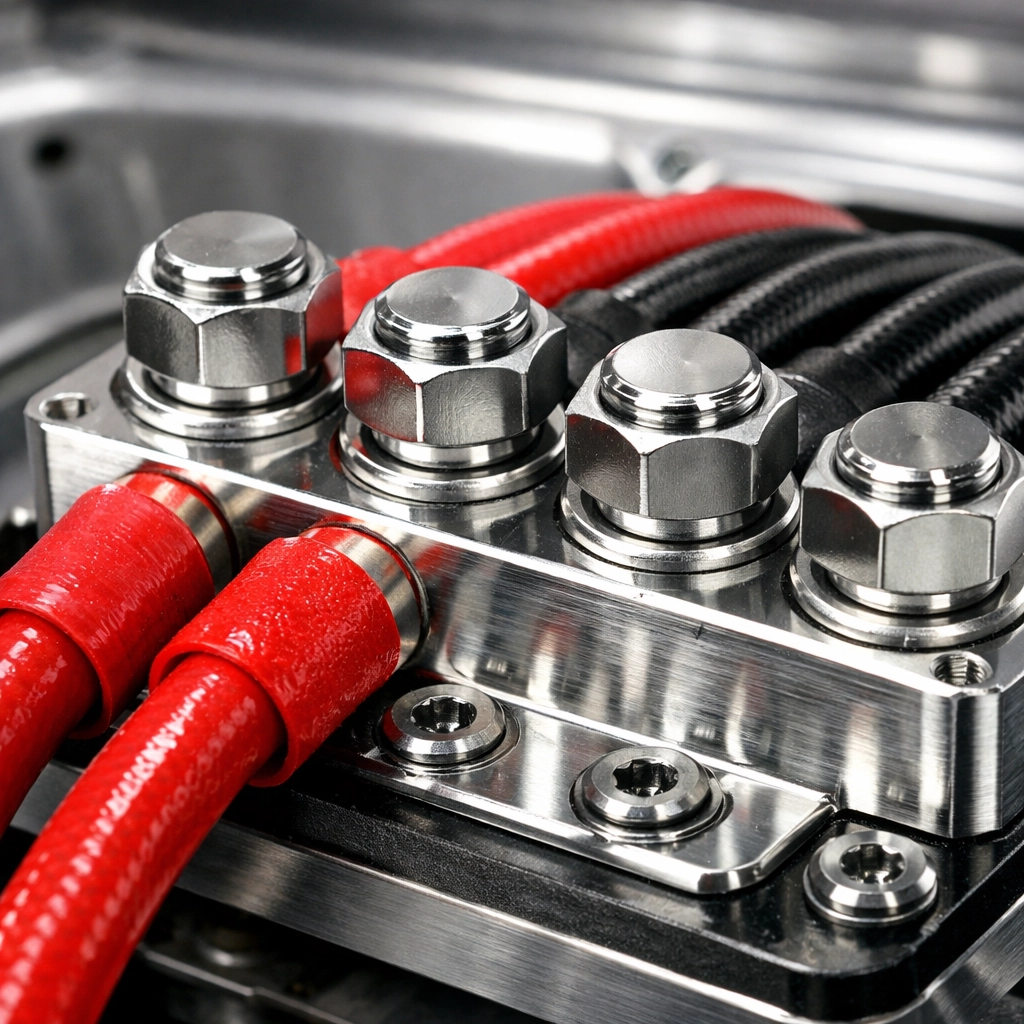
In a residential building, solid copper wire is the standard. In a Ford Interceptor Utility bouncing over Texas backroads or idling for eight hours straight, solid wire is a liability.
Solid wire is rigid. Constant vehicle vibrations and thermal expansion cause solid wire to develop micro-fractures. Eventually, these wires snap or create high-resistance “hot spots” at connection points. High resistance leads to heat, and heat leads to melted plastic and potential fire hazards.
The Fix: Use high-quality, multi-strand automotive-grade wire. Stranded wire is flexible, offering more surface area for electrical contact and the ability to withstand the literal “shaking” that comes with high-speed pursuits and everyday patrol.
3. Loose or Improperly Secured Wiring
Oops… did that lightbar just go dark? Often, the culprit isn’t a blown fuse; it’s a loose connection. If a wire isn’t fully seated in a terminal block or if a crimp is “soft,” the connection will eventually fail.
We often see wires pushed too far into connectors (where the insulation is being clamped rather than the wire) or not stripped back far enough. This creates intermittent contact. You might test the lights in the bay and they look fine, but hit one pothole on the highway, and the system fails.
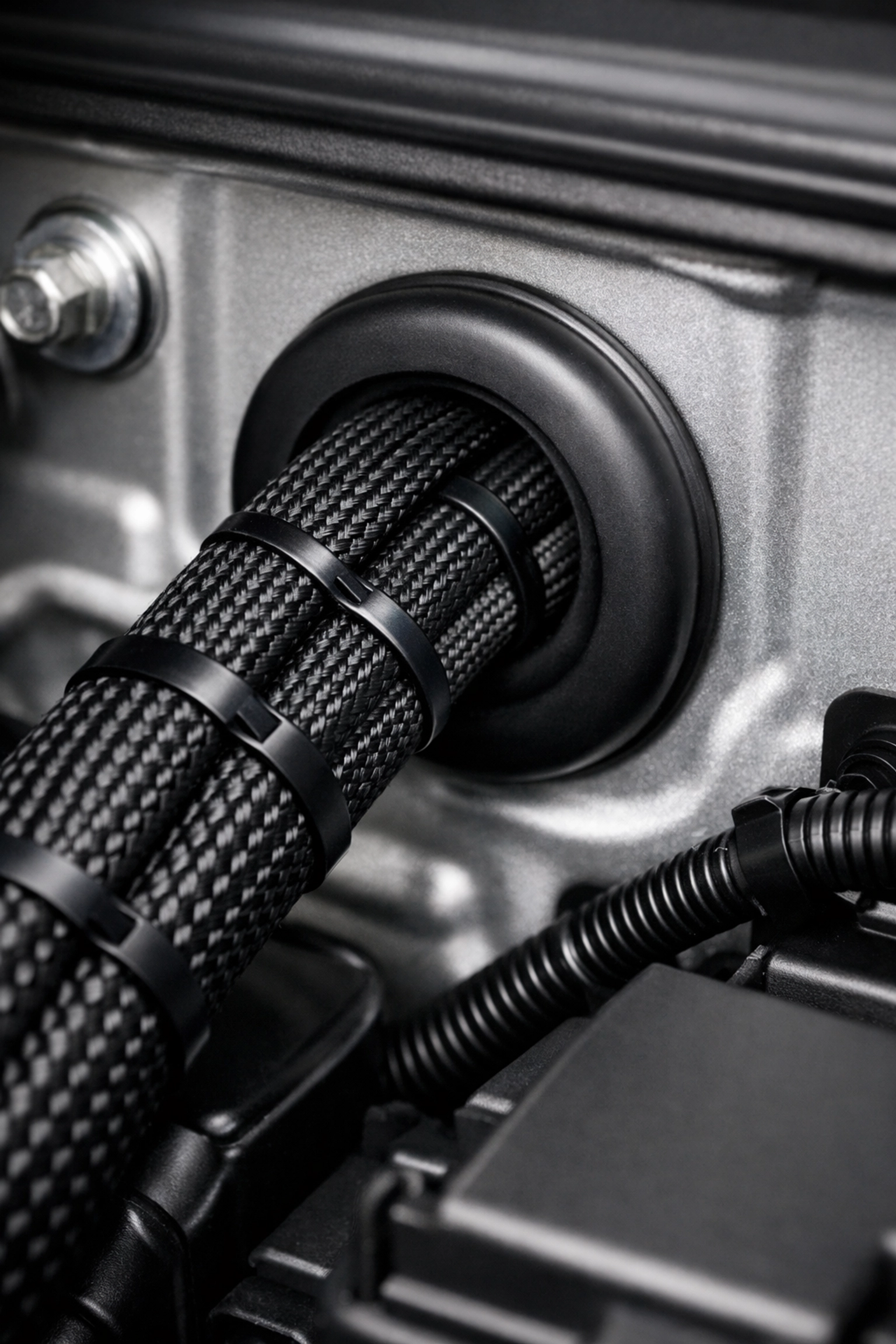
The Fix: Use professional-grade ratcheting crimpers and verify every connection with a “tug test.” If it wiggles, it’s a hazard. Ensure all wiring looms are secured with high-heat zip ties or P-clamps every 12 to 18 inches to prevent rubbing and chafing against the vehicle frame.
4. Leaving Wire Splices Exposed
In the humid Texas climate or areas with heavy road salt, an exposed wire splice is an invitation for corrosion. Bare wires or “twist-and-tape” methods are the fastest ways to ensure an electrical short.
Electrical tape is not a permanent sealant. Over time, the adhesive fails, the tape unravels, and moisture enters the wire. This can cause “phantom” electrical issues where lights turn on or off by themselves or, in extreme cases, cause a short circuit that fries the vehicle’s expensive Body Control Module (BCM).
The Fix: Every splice must be insulated with marine-grade heat shrink tubing or sealed with high-quality butt connectors. This creates a water-tight seal that protects the integrity of the police car lighting installation for the life of the vehicle.
5. Ignoring Polarity and Wiring Schematics
Modern emergency lighting systems are sophisticated. They aren’t just “on/off” devices anymore; they utilize sync wires, pattern selectors, and low-power modes. Reversing the polarity (swapping positive and negative) on an LED driver can instantly “brick” an expensive lighthead.
Even more dangerous is crossing wires. If a sync wire touches a power wire, you could send 12 volts into a 5-volt data line, causing a cascade of failures across the entire lighting controller.
The Fix: Follow the manufacturer’s wiring diagram religiously. Use color-coded wiring that matches the equipment’s harness. If you’re unsure, contact us for a consultation rather than guessing and risking the hardware.
6. Inadequate Power Supply and Grounding
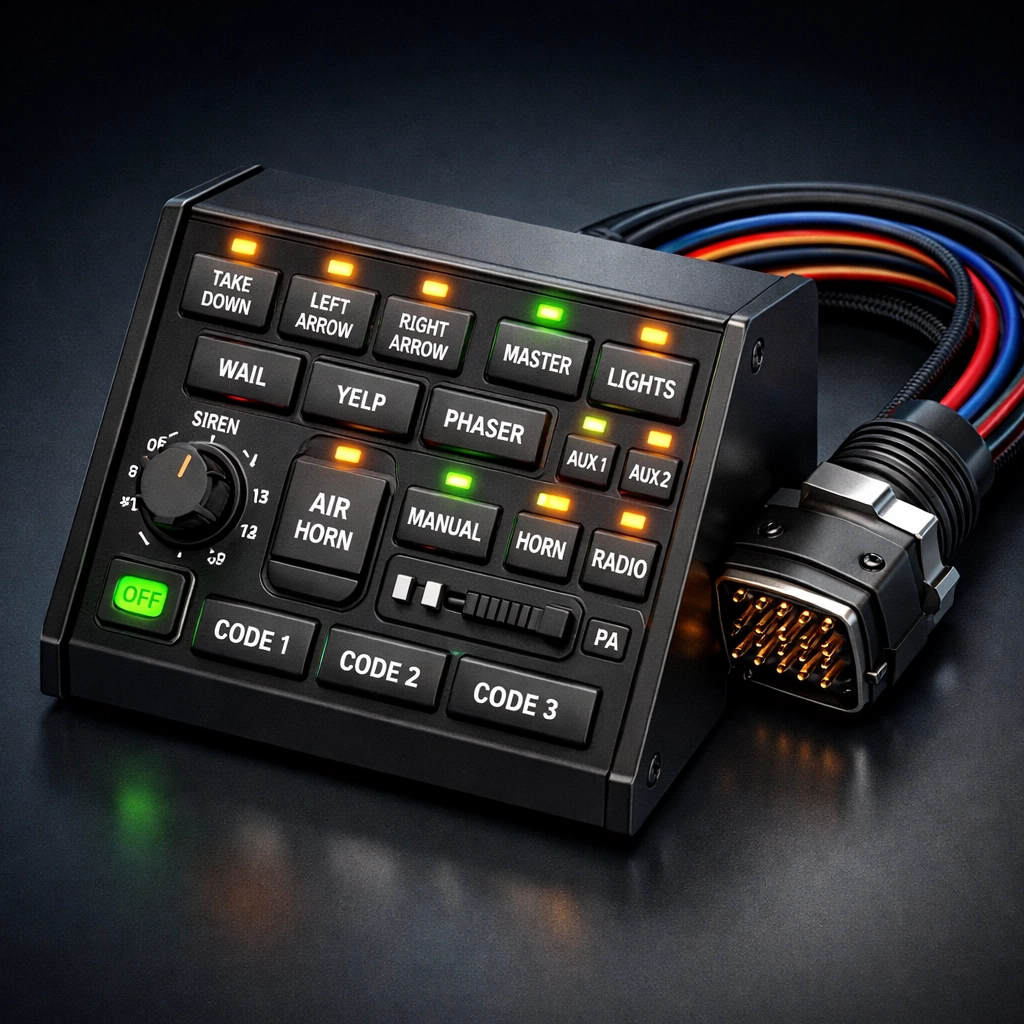
Emergency lights pull significant amperage, especially when combined with sirens, radios, and mobile data terminals (MDTs). A common mistake is tapping into an existing factory circuit that wasn’t designed for the load.
Poor grounding is another silent killer. If you ground your lighting to a piece of plastic trim or a painted bolt, the electrical path will be restricted. This causes the lights to “hum” or causes interference with the vehicle’s radio system.
The Fix: Run a dedicated power and ground direct to the battery or an approved power distribution block. Ensure grounds are made to clean, bare metal on the vehicle chassis. For heavy-duty builds, consider an integrated power management system to prevent battery drain.
7. Poor Placement and Visual Obstructions
A 360-degree lightbar is useless if it’s blocked by a roof rack, an oversized antenna, or the vehicle’s own trunk lid when opened. Furthermore, improper placement of interior dash lights can cause “flashback”, where light reflects off the windshield and blinds the officer inside the cabin.
We also see “over-lighting,” where so many lights are crammed onto the vehicle that they wash out the turn signals and brake lights, making the police car a hazard to other drivers who can’t tell which way the officer is turning.
The Fix: Conduct a “walk-around” visibility test from 50, 100, and 500 feet. Use shrouds on interior lights to prevent flashback. Balance the lighting package to ensure the vehicle is visible without becoming a confusing “wall of glare.”
Why Professional Upfitting Matters
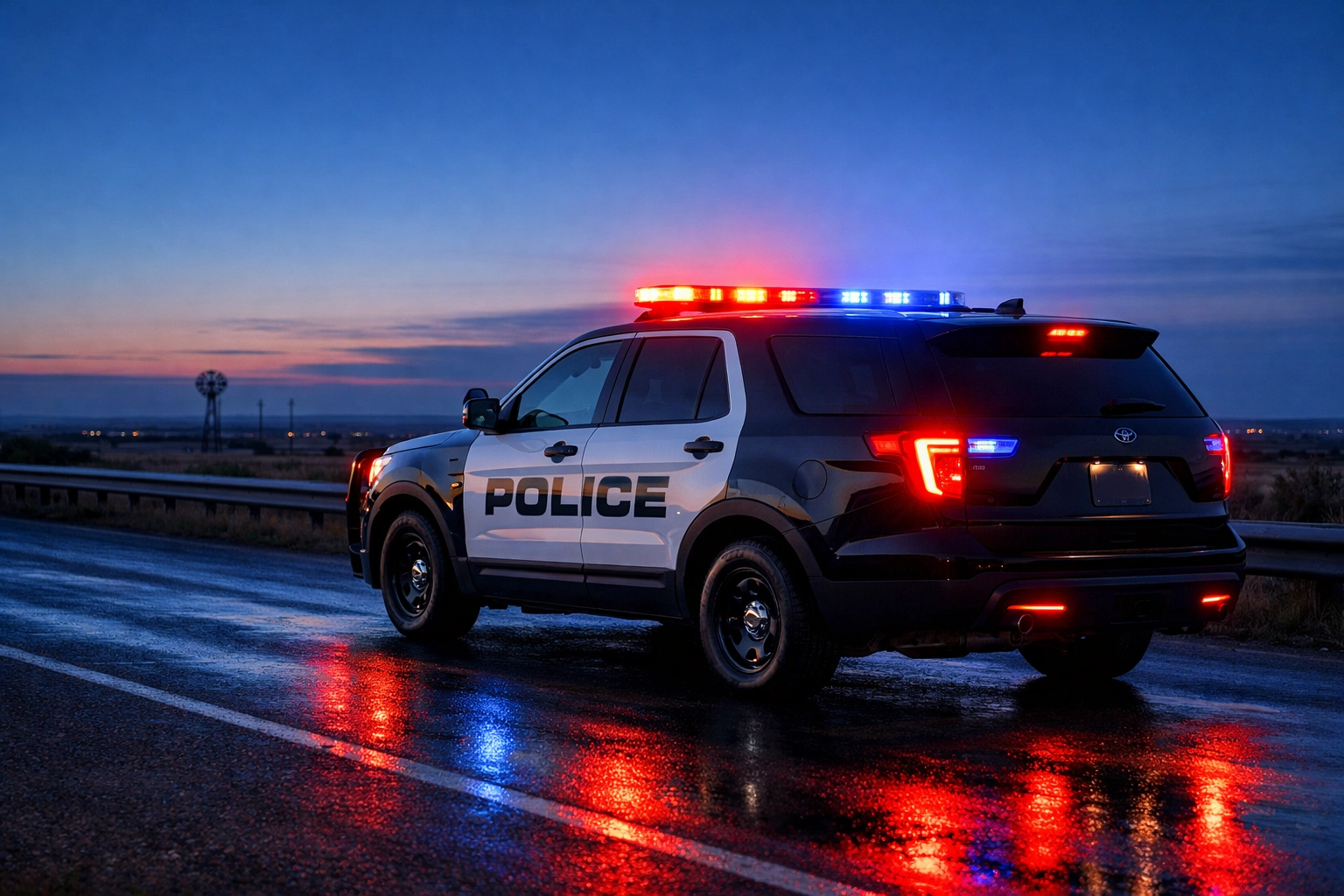
Cutting corners on lighting might save a few dollars initially, but the long-term costs of downtime and repairs far outweigh the savings. Professional police vehicle upfitting ensures that every wire is measured, every fuse is rated correctly, and every light is positioned for maximum safety.
At Signal Fleet Solutions, we pride ourselves on The Art of Connection. We follow OEM-approved procedures to protect your vehicle warranties and ensure your fleet stays on the street, where it belongs.
FAQs
Q: Can I use regular house wire for my police car lights?
A: Absolutely not. Household wire is solid-core and will break under vehicle vibration. You must use stranded, automotive-grade wire.
Q: Why do my lights flicker when the siren is on?
A: This is usually due to a voltage drop or a poor ground. Both the siren and the lights are fighting for power on an inadequate circuit.
Q: Do I need a second battery for my lighting package?
A: For standard patrol setups, a high-output alternator and a single heavy-duty battery are usually enough. However, for command vehicles with extensive electronics, a dual-battery system is recommended.
Q: Is heat shrink better than electrical tape?
A: Yes, 100% of the time. Heat shrink provides a mechanical and environmental seal that tape cannot match.
Q: What is “flashback,” and how do I stop it?
A: Flashback is when light from an interior-mounted LED reflects off the glass and hits the driver’s eyes. You can stop it by using rubber or plastic shrouds that seal the lighthead against the window.
Q: How often should I inspect my vehicle’s lighting?
A: We recommend a daily function check by the officer and a deep-dive inspection of wiring and mounts during every oil change or scheduled maintenance.
Q: Can I install my own lights without voiding the vehicle warranty?
A: If the installation causes a failure (like a shorted BCM), the manufacturer may deny the warranty claim. Professional upfitters like Signal Fleet Solutions use Adaptive Advantage techniques that align with OEM standards.
Signal Fleet Solutions
Texas’ Premier Fleet Upfitting and Customization Partner
Learn more about our services
Join our team