

Improving Response Times with Ergonomic Cockpit Design
In the world of Texas public safety, every second is a commodity. When a call comes in, the transition from “patrol mode” to “emergency response mode” happens in a heartbeat. However, if an officer or EMT is fighting against their own vehicle’s interior layout, those precious seconds slip away. At Signal Fleet Solutions, we don’t just “bolt things in.” We engineer mobile environments.
Ergonomic cockpit design is the science of arranging public safety vehicle equipment so that it works with the human body, not against it. This isn’t just about comfort, though comfort is a massive side benefit, it’s about operational efficiency and safety.
The Science of the “Mobile Office”
For a first responder, the vehicle is more than a mode of transport; it is a high-stress workspace. Traditional vehicle interiors are designed for commuters, not for professionals wearing 20 pounds of gear who need to operate radios, sirens, and computers while navigating traffic.
Reducing Cognitive Load
When a cockpit is cluttered or poorly organized, the driver’s brain has to work harder to locate specific controls. This is known as “cognitive load.” In high-speed pursuits or urgent medical calls, high cognitive load leads to slower reaction times.
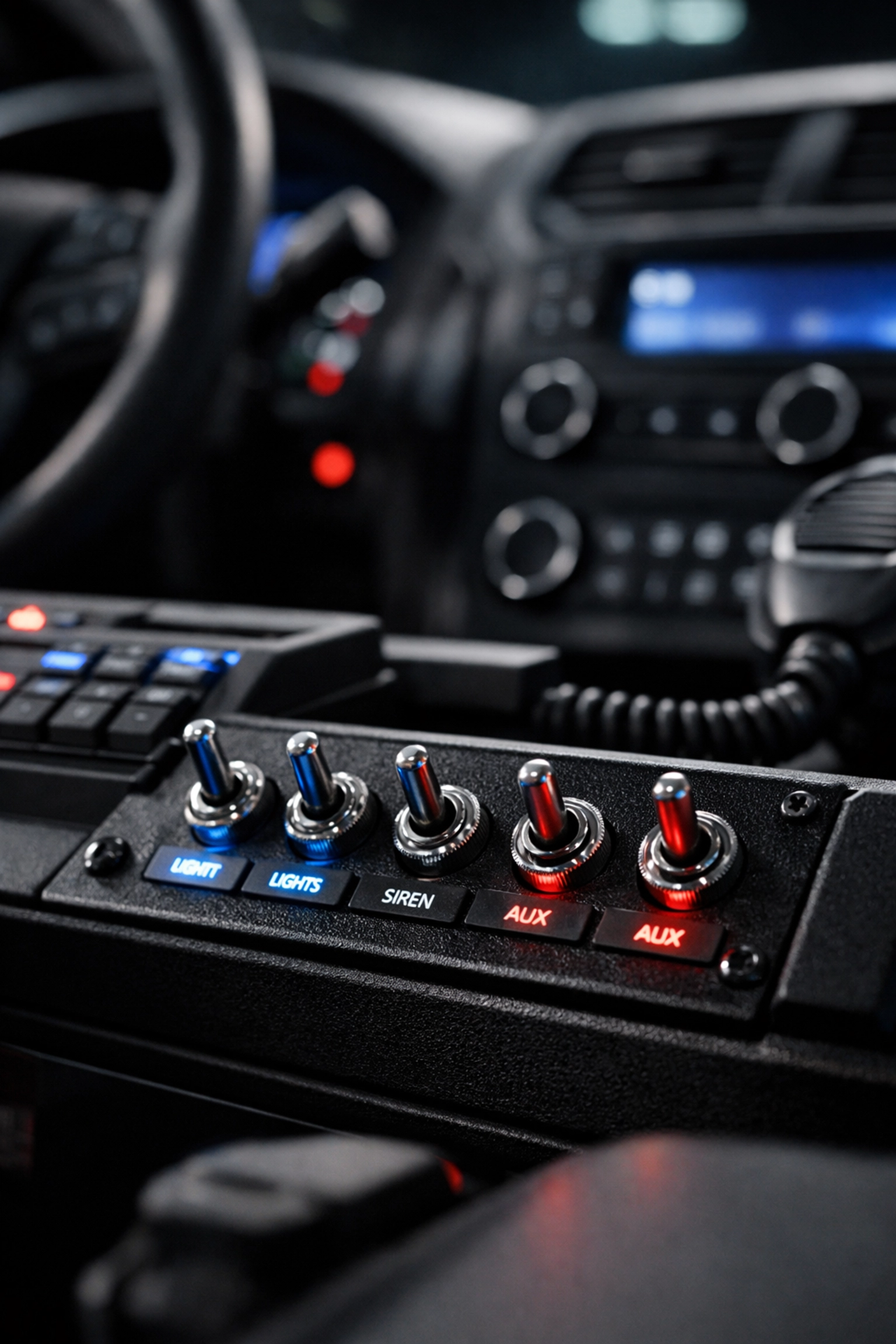
By using augmented visualization principles, such as color-coded switches or tactile-distinct buttons, we help responders identify vehicle status without taking their eyes off the road. If you can feel the difference between your siren toggle and your scene lights by touch alone, you’ve just gained a competitive advantage against the clock.
Optimizing Situational Awareness
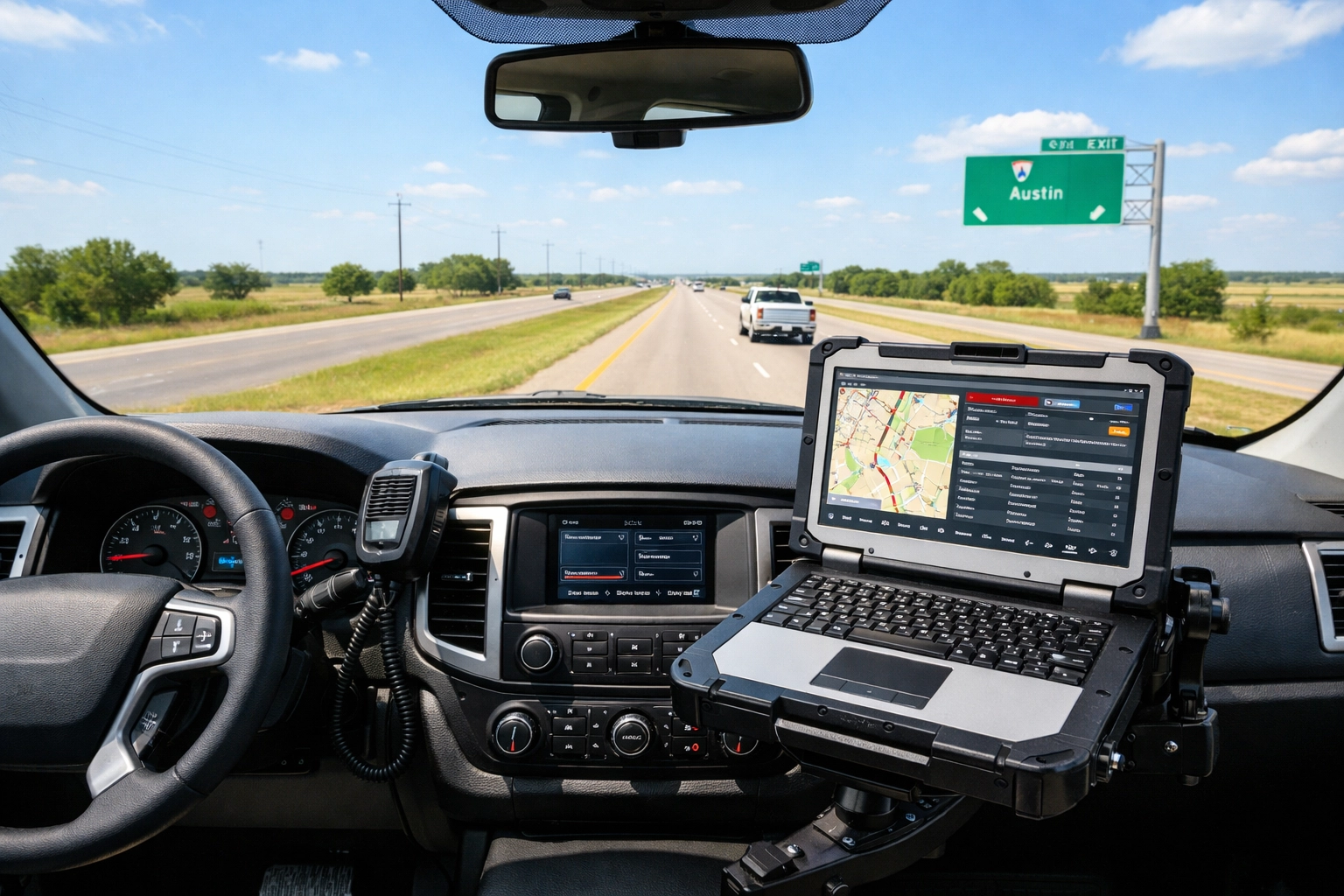
Situational awareness is the ability to perceive, understand, and predict what is happening around the vehicle. A poorly placed laptop mount can create massive blind spots. A radio placed too low requires the driver to look down and away from the windshield.
Proper law enforcement vehicle customization ensures that all primary data sources, laptops, tablets, and radar displays, are kept within the peripheral vision line. Our goal is “eyes on the road, hands on the wheel” as much as possible.
The Geometry of Accessibility: Reach Zones
In ergonomics, we talk about “reach zones.”
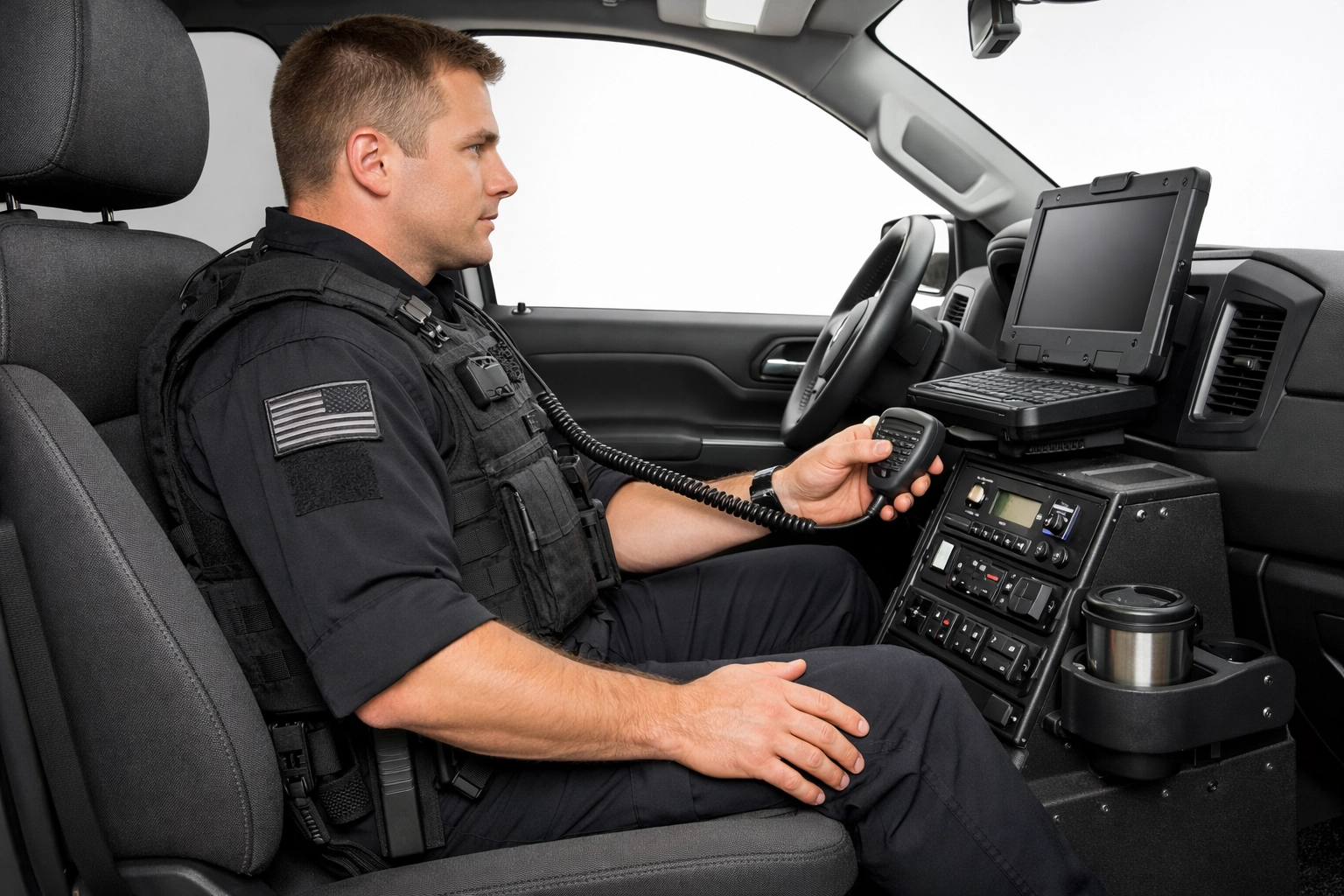
- Primary Zone: Controls reachable with minimal arm movement (Steering wheel, sirens, radio PTT).
- Secondary Zone: Controls reachable by extending the arm but without leaning the torso (Laptop keyboards, climate control).
- Tertiary Zone: Controls that require leaning or shifting (Storage, specialized tactical gear).
Oops… many DIY upfits place critical toggles in the tertiary zone. If an officer has to unbuckle or lean forward to activate a takedown light, safety is compromised. Signal Fleet Solutions prioritizes the Primary Zone for emergency functions to ensure that muscle memory takes over during high-stress moments.
Combating Physical Fatigue
Texas is big. Officers and EMS personnel often spend 8 to 12 hours a day inside their vehicles. If the equipment layout forces a twisted posture or puts pressure on the lower back, fatigue sets in quickly.
Fatigue isn’t just a comfort issue; it’s a performance killer. A fatigued driver has slower reflexes and poorer decision-making skills. Our upfitting process considers the interaction between the seat, the center console, and the floor-mounted equipment. We ensure that there is ample “knee room” and that the seat’s range of motion isn’t restricted by a bulky partition or a poorly placed gun rack.
For more on how we handle complex integrations, check out The Art of Connection.
Muscle Memory and Instinctive Response
When posture and control interaction feel natural, muscle memory develops faster. This reduces the mental effort required to execute routine procedures. In a crisis, you don’t want to think about where the “Yelp” tone button is; you want your hand to move there instinctively. Ergonomic design facilitates this “automaticity.”
Customization for Diverse Fleet Needs
Every agency has a different mission profile. A Chevy Tahoe for a K9 unit has different ergonomic requirements than a Ford Explorer used for traffic enforcement.
- K9 Units: Temperature monitoring displays must be visible at a glance.
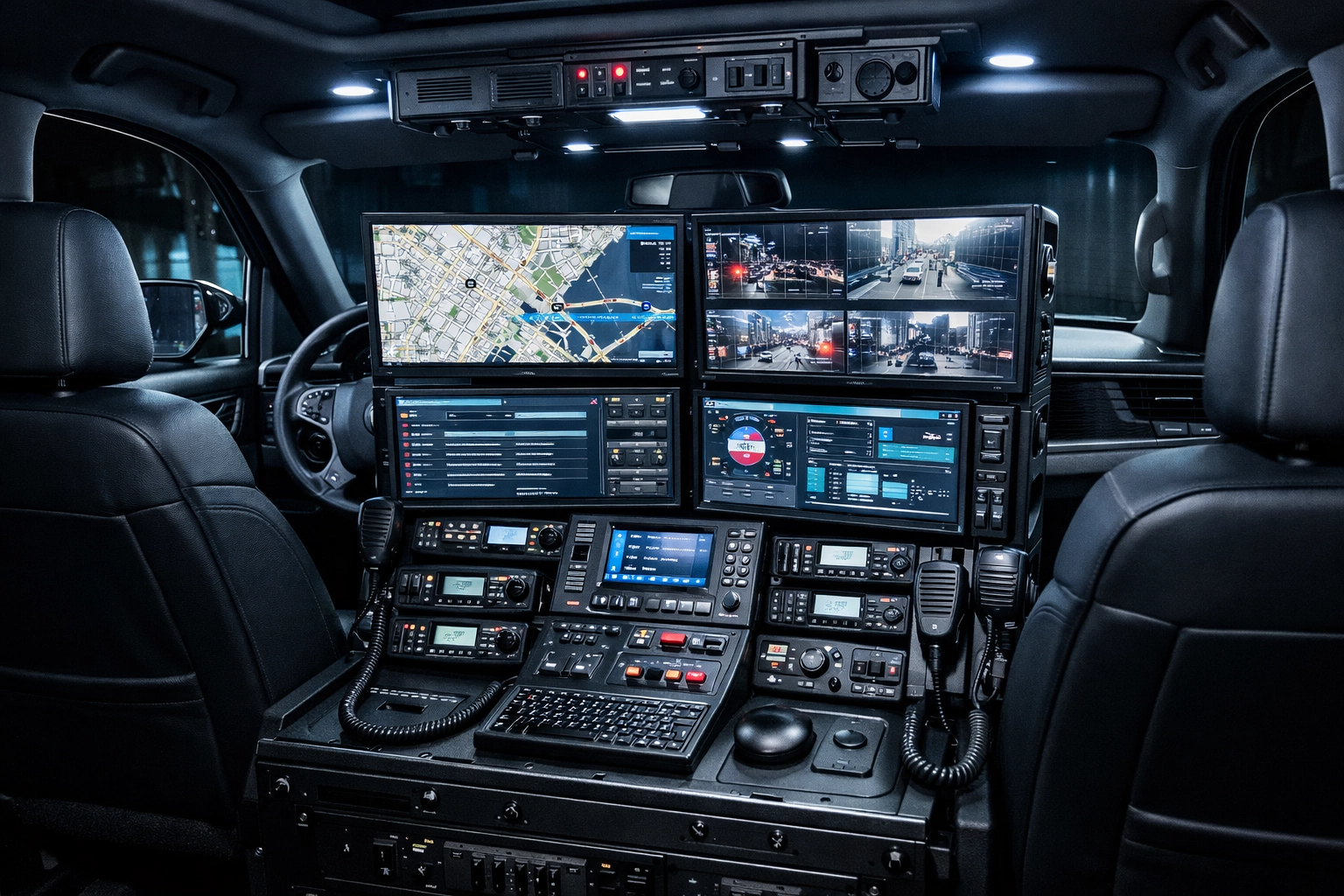
- Supervisors: Need easier access to multiple radio banks and command tablets.
- EMS/Fire Command: Require surfaces for maps and tactical planning.
At Signal Fleet Solutions, we provide turnkey services that tailor the cockpit to the specific role of the vehicle. We don’t believe in a one-size-fits-all approach.
Technical Integrity and OEM Standards
Upfitting isn’t just about where the equipment goes; it’s about how it stays there. Improperly secured equipment becomes a projectile in the event of a crash. Furthermore, modern vehicles are packed with sensors and airbags.
Our technicians follow OEM-approved procedures to ensure that the ergonomic layout doesn’t interfere with side-curtain airbags or the vehicle’s structural integrity. Maintaining these standards protects your investment and, more importantly, your people. You can learn more about our commitment to quality on our About Us page.
The Power Factor
Ergonomics also extends to the “health” of the equipment. A laptop that constantly reboots due to power fluctuations is an ergonomic nightmare. We integrate sophisticated power management systems to ensure that when an officer reaches for a tool, it is powered and ready.
Why Texas Agencies Choose Signal Fleet Solutions
Based in the heart of Texas, we understand the local climate and operational demands. Heat management is a part of ergonomics, too. We ensure that equipment consoles are ventilated and that their placement doesn’t block AC vents, a small detail that makes a massive difference in a 105-degree August afternoon.
If you’re looking to upgrade your fleet’s efficiency, contact us today to discuss a custom layout.
FAQs
1. What is ergonomic cockpit design in the context of fleet vehicles?
It is the strategic arrangement of equipment, radios, laptops, sirens, and mounts, to optimize the driver’s reach, visibility, and comfort, thereby reducing distraction and fatigue.
2. How does better design actually improve response times?
By placing critical controls in the “Primary Reach Zone” and reducing cognitive load, responders can activate emergency systems faster and maintain higher speeds safely because their eyes stay on the road.
3. Will custom ergonomic layouts interfere with vehicle airbags?
Not when done professionally. We follow strict OEM guidelines to ensure all equipment is placed outside of “deployment zones,” keeping the vehicle safe for the occupants.
4. Can older vehicles be retrofitted with ergonomic equipment?
Absolutely. We can swap out outdated consoles and mounts for modern, adjustable solutions that improve the ergonomics of your existing fleet.
5. Does ergonomic upfitting increase the cost significantly?
While specialized mounts may have a slightly higher upfront cost, the long-term savings in reduced officer fatigue, lower accident rates, and improved equipment longevity usually offer a significant return on investment.
6. What are the most important pieces of equipment to prioritize?
The siren/light controller and the primary radio are the top priorities for reach, followed by the mobile data terminal (MDT/laptop) for visibility and ease of use.
7. How do I start the process of customizing my fleet?
The best way is to reach out via our contact page. We’ll discuss your specific mission needs and provide a layout recommendation.
Summary of Ergonomic Benefits
| Feature | Impact | Benefit |
|---|---|---|
| Tactile Controls | No-look operation | Eyes on the road |
| Adjustable Mounts | Reduced neck strain | Lower fatigue levels |
| Low-Profile Consoles | Better peripheral vision | Increased situational awareness |
| Vented Equipment | Cooler cabin temps | Improved officer comfort |
Building a fleet that performs starts from the driver’s seat out. Let’s make sure your team has the adaptive advantage they need to serve our communities effectively.
Signal Fleet Solutions
Precision Upfitting for Texas First Responders
https://signalfleetsolutions.com/